Interior Style Guide: Set the Tone First, Then Choose Furniture
Most homes feel visually messy not because the pieces are ugly, but because furniture was bought first and style considered later. The right order is the reverse: decide the tone and colour ratio of the whole home first, then let every piece serve that tone. This guide covers the three most popular styles in Taiwan and their furniture pairing formulas.
The Underlying Logic: the 60-30-10 Colour Rule
Whatever style you choose, the same ratio applies: 60% base colour (walls, floors, large cabinetry), 30% primary colour (sofa, dining table, curtains — the large furniture), 10% accent (cushions, lamps, art, vases).
Large furniture sits in the 30% layer — which is why the sofa and dining table define a home's style impression more than anything else. Repainting walls is a renovation; swapping cushions is pocket change; but a sofa stays for a decade. On a limited budget, spend on the primary layer for the highest style return.
Cream Style: Warm, Curved, Low Saturation
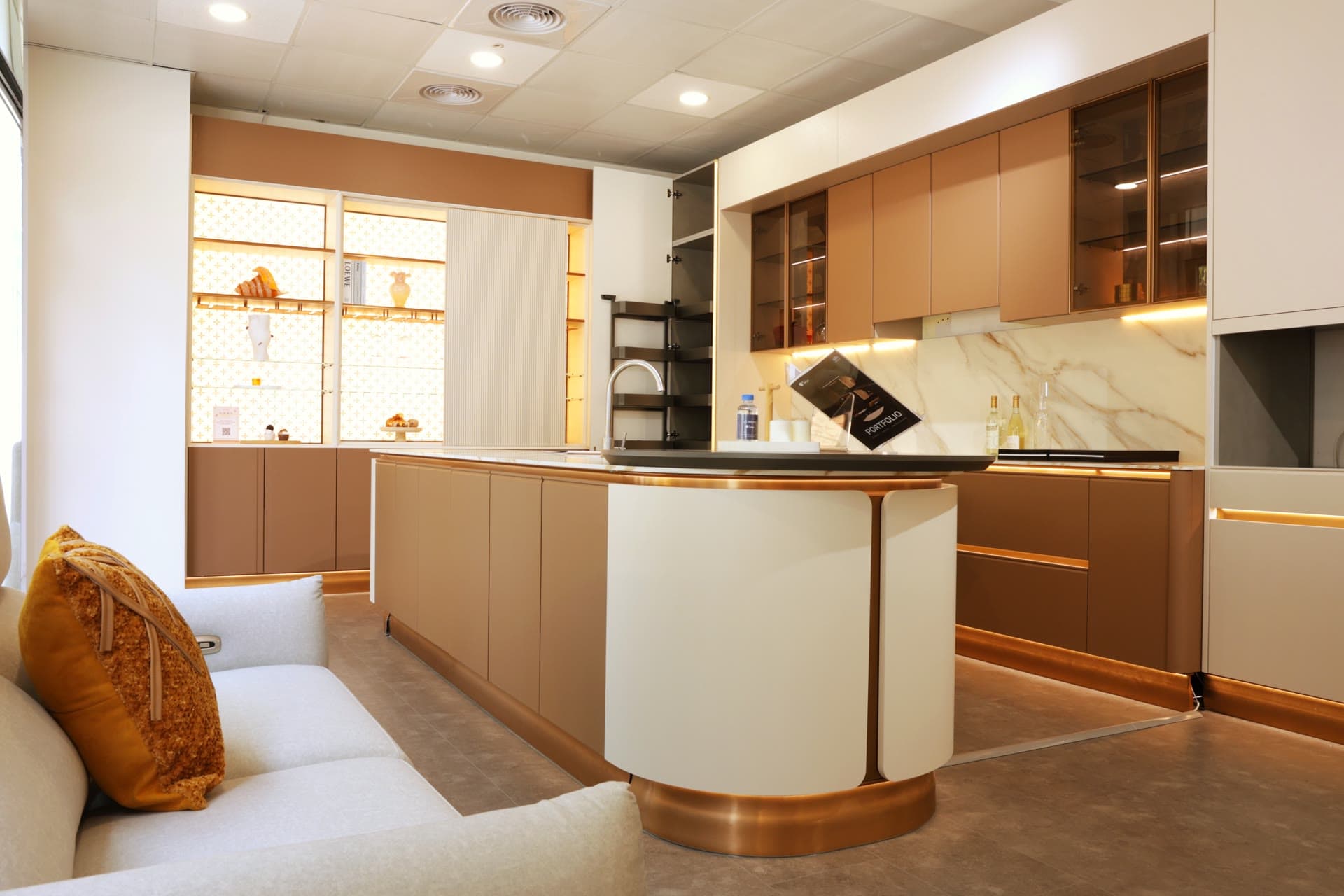
Cream style is currently the most asked-about look in Taiwan: a base of off-white, milk-tea and oatmeal tones, paired with curved silhouettes and soft materials like velvet and linen — relaxed and warm, like a cup of milk tea.
- Colours: off-white + milk tea + light wood, with touches of caramel or blush; avoid high saturation and pure black.
- Furniture vocabulary: curved-arm sofas, rounded-corner tables, velvet or cotton-linen upholstery, light wood veneer.
- Pairing example: for a cream living-dining area, choose a rounded fabric sofa and a light-toned island dining table with a warm-white sintered stone top — warmer than cool grey, and truer to the style.
- Common mistake: an entire home in cream with no tonal depth looks flat; keep at least one dark piece to anchor the space.
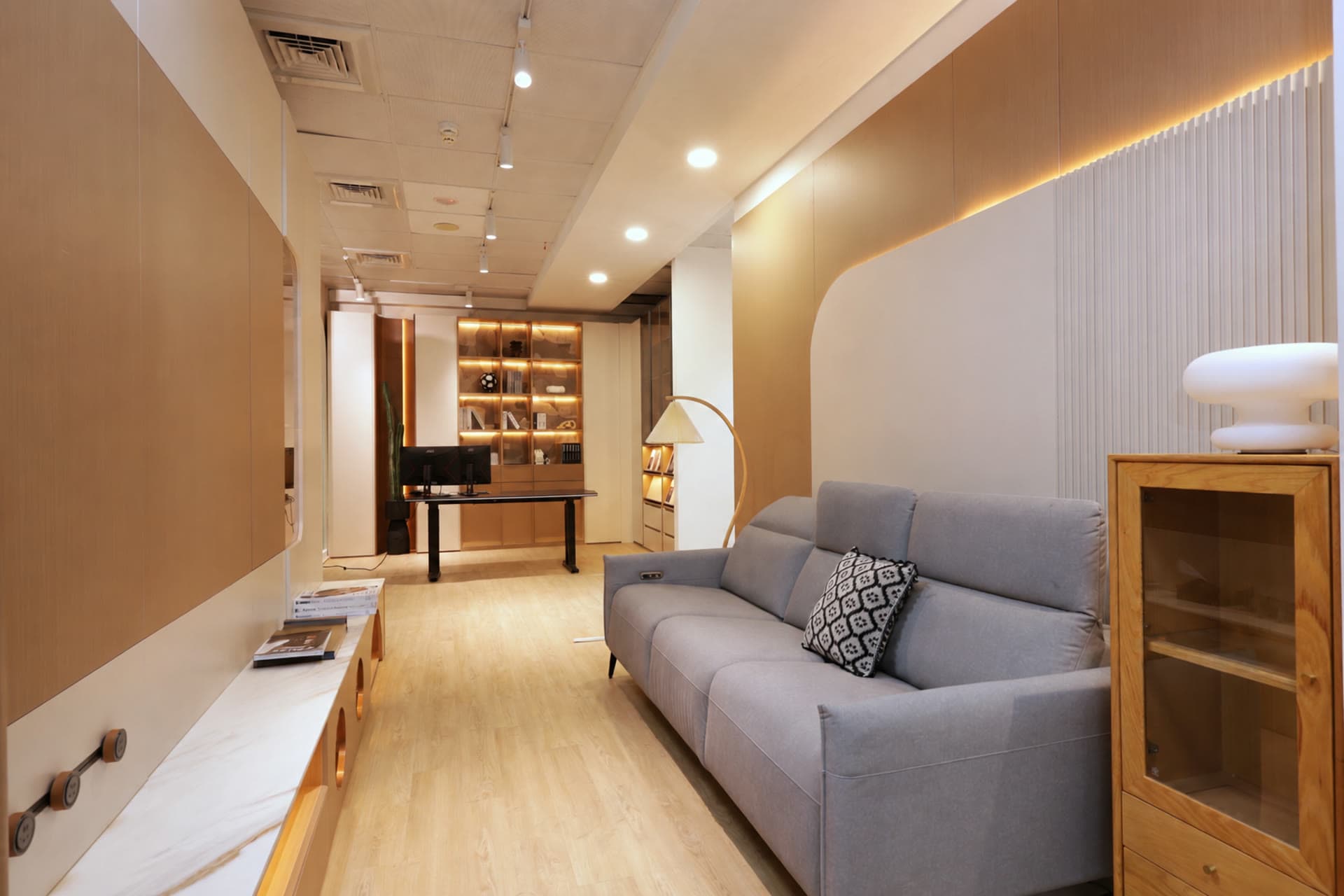
Modern Minimalist: Clean Lines, Function First
Modern minimalism is built on "less is more": straight lines, handle-less fronts, hidden storage, and a palette of black, white, grey and wood. It ages best, never dates, and suits smaller homes — a clean visual field makes space feel larger.
- Colours: white + grey + wood as the base; add depth with one dark piece or metal details.
- Furniture vocabulary: straight-lined sofas, slim legs or floating designs, matte finishes, integrated storage.
- Pairing example: a clean-lined power sofa and a storage-integrated island dining table — function hidden inside the form is the essence of minimalism.
- Common mistake: confusing minimal with cheap; with fewer pieces, the quality of each one shows more, so don't cut the material budget.
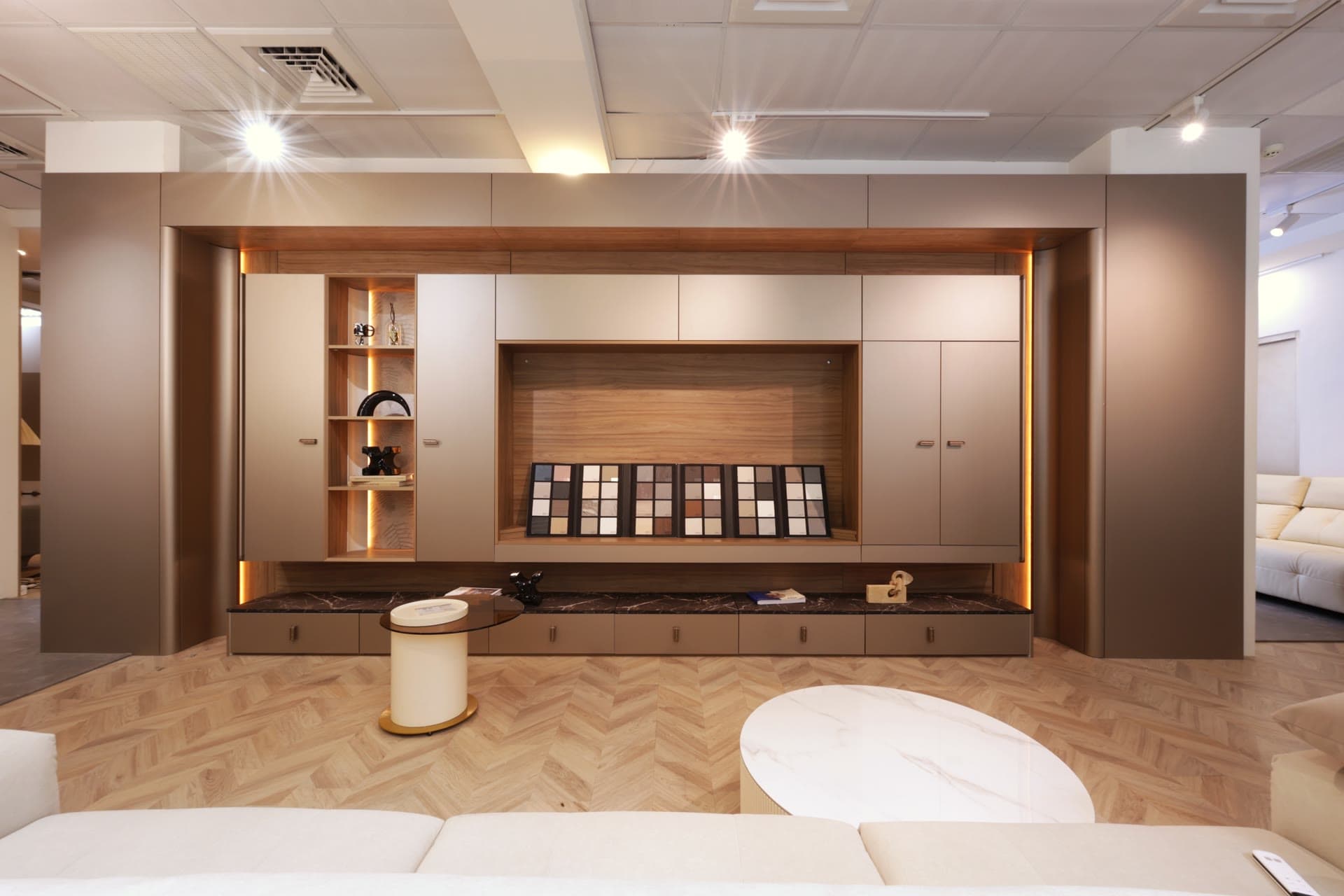
Light Luxury: Refined Materials, Metal Details
Light luxury layers refinement onto a minimalist skeleton: marble-look surfaces, velvet, metal trims, dark wood veneer. The key word is light — luxury as accent, not wallpaper; one or two metal details are enough.
- Colours: grounded tones like grey, deep blue and forest green, accented with gold or bronze metal.
- Furniture vocabulary: stone-pattern sintered tops, velvet sofas, metal legs and trims, dark wood veneer.
- Pairing example: an island dining table with a stone-pattern sintered top is itself the protagonist of a light-luxury space — add a velvet sofa and the look is complete.
- Common mistake: too much metal and stone turns light luxury into flashy; cap the luxury accents at two or three per room.
A Furniture-Buying Order That Works for Every Style
Once the style is set, buy in this order to avoid mistakes:
- Big first, small last: fix the sofa and dining table first; lamps, art and textiles come last.
- Measure before you browse: the most beautiful piece is a disaster at the wrong size — confirm everything in cm.
- Echo materials: let at least one pair of elements echo each other — sofa fabric with dining chairs, table veneer with the TV cabinet — and the space reads as a set.
- Leave room: keep furniture below roughly 40% of the floor area; style is set off by the space around it.
Style Pairing FAQs
Which style suits a small home?
Both modern minimalist and cream style. The shared principles are low saturation, fewer pieces and a light base. Minimalism keeps the visual field clean with hidden storage; cream style softens and visually expands the space with warm tones. Avoid ornament-heavy styles — small spaces cannot hold many focal points.
Do the sofa and dining table need to match in style?
In open-plan layouts the living and dining areas share one view, so keep one tone and let materials echo — sofa fabric matching the dining chairs, table veneer matching the TV cabinet. With separate rooms, adjacent spaces can vary slightly, but keep the colour-ratio formula consistent.
Will cream style date quickly?
Its essence — low-saturation warm tones plus soft materials — is inherently timeless; what dates is over-stacked decoration. Choose classic silhouettes and restrain the accents, and a cream base easily lasts a decade.
On a limited budget, which piece comes first?
Start with the large piece you use the longest — for most families the sofa; for households that cook and host, the dining table or island. Large furniture forms the 30% primary layer that defines the style, and is the last place to compromise.
Related Guides
Not sure which style fits your home?
Send your floor plan or photos to our home stylist — we will suggest a style direction and furniture layout based on your layout, light and lifestyle. Or visit our Neihu showroom to feel the materials and colours in person.